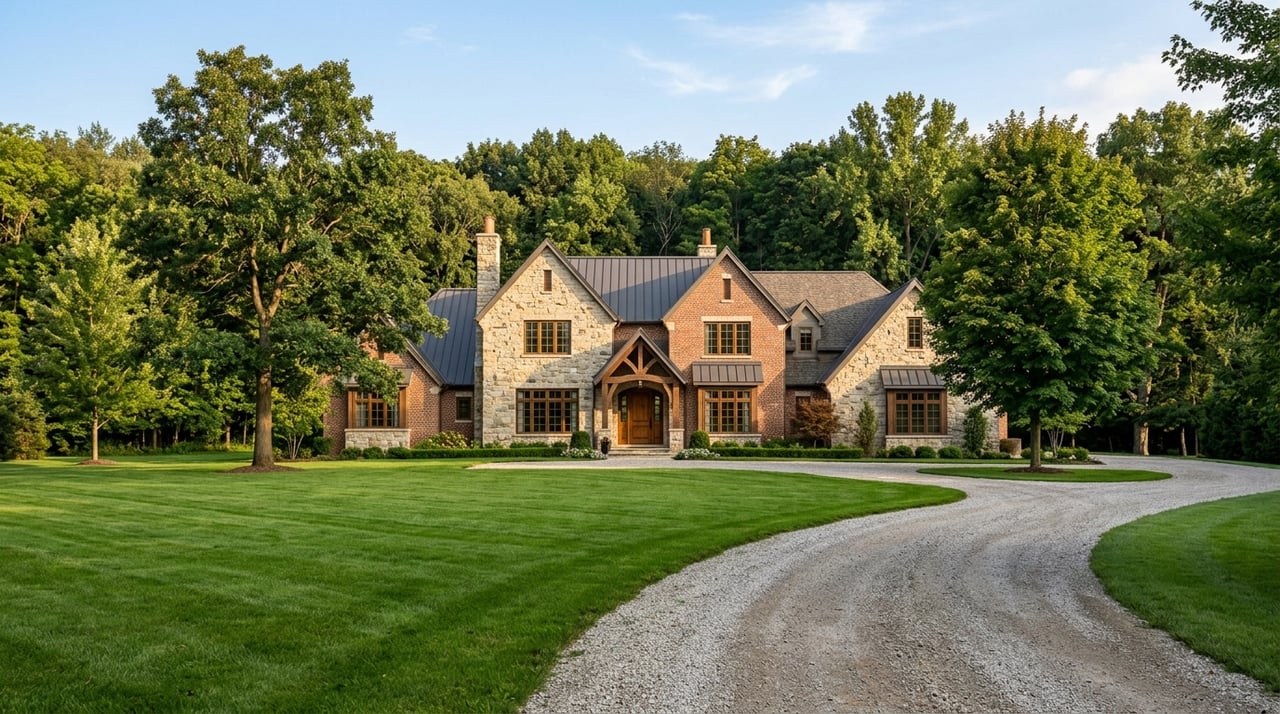
If you have ever fallen for a beautiful home with open pasture views near Versailles, you already know the appeal. Acreage offers privacy, flexibility, and that classic Central Kentucky setting, but it also comes with questions that matter long before closing day. This guide will help you sort through the key issues, from zoning and access to septic, wells, and taxes, so you can buy with more clarity and fewer surprises. Let’s dive in.
Why acreage near Versailles is unique
Versailles sits in one of the most agriculture-focused parts of Kentucky. Woodford County reports more than 123,000 acres of agricultural land and has the largest total farm income in the state, so local land-use rules are shaped around preserving farmland and supporting agricultural operations.
That matters because acreage here is not just a bigger yard. In Woodford County, zoning and right-to-farm policies are designed to protect active agricultural use. If you are buying for a horse-country lifestyle, that local framework can be a real advantage, but you still need to confirm what a specific property allows.
Start with your intended use
Before you fall in love with the setting, get clear on how you want to use the land. Your plans might include keeping horses, adding a barn, creating space for training, or simply enjoying privacy with room to spread out.
In Woodford County’s Agricultural A-1 district, principal uses include agriculture, riding stables, single-family detached dwellings, greenhouses and nurseries, safety services, and basic utilities or telecommunications facilities. The ordinance also includes certain horse-related activities such as riding lessons, training, boarding, and related care as agricultural use on tracts of at least five contiguous acres.
That does not mean every acreage property automatically fits your plans. You should verify the parcel’s actual zoning and review any conditional-use history before assuming you can add buildings, run horse-related activities, or split the tract later.
Questions to answer early
- Is the property zoned in a way that supports your intended use?
- If you want horses, does the tract meet the acreage threshold?
- Are there any conditional-use approvals or restrictions already tied to the parcel?
- Are accessory structures like private stables allowed for this property?
Check access before making assumptions
Acreage can look simple on a listing sheet and still have complicated access. One of the biggest issues is legal road access, especially if the home sits well off the main road or uses a private drive.
In Woodford County, privately owned streets may require a minimum 30-foot right-of-way easement. The county also notes that future streets must be upgraded to county standards at the owners’ or HOA’s expense before county acceptance, and access onto a publicly maintained road may require spacing or approval from the county engineer or the Kentucky Transportation Cabinet.
The practical takeaway is simple. You want to know not just how you get to the house, but who has the legal right to use that route and who is responsible for maintaining it.
What to confirm about access
- Is access recorded and legally documented?
- Is the property on a county-maintained road or a private drive?
- If the drive is private, who pays for gravel, grading, drainage, or repairs?
- Are there easements that affect how the property is used or improved?
Utilities matter more on rural property
With acreage, utilities often require more due diligence than they do in a typical neighborhood setting. If the property is not connected to public sewer and water, septic and water supply should be part of your offer-period investigation.
Kentucky’s onsite sewage program uses local health departments to evaluate whether site and soil conditions are suitable for an onsite system. The system must also be installed by a certified Kentucky onsite septic installer.
For private wells, annual testing is a smart baseline. University of Kentucky Extension recommends testing for bacteria and other contaminants at least once a year, and Kentucky guidance notes that an initial bacteria test is required when a new well is installed.
Utility questions to ask
- Is the home served by public water or a private well?
- Is it on public sewer or an onsite septic system?
- Are there records for septic installation, repairs, or pumping?
- Has the well been tested recently?
- Are site and soil conditions suitable if you hope to expand later?
Floodplain and land restrictions deserve a close look
Not all usable-looking acreage is equally flexible. Before you close, check whether any part of the property sits in floodplain or is affected by other recorded restrictions.
Woodford County maintains flood resources and floodplain permit information through its planning commission. A floodplain issue does not automatically make a property a bad purchase, but it can affect where you build, what improvements you make, and how future buyers view the property.
You also want to look for conservation easements or similar recorded restrictions in the title chain. In nearby Fayette County, for example, land protected by the Purchase of Development Rights program may require Rural Land Management Board approval before adding new housing, expanding existing housing, or adding paving. Some newer easements also include impervious-surface limits.
Budget beyond the mortgage
Acreage buyers often focus on price per acre and monthly payment first. That makes sense, but the true cost of ownership usually goes beyond the mortgage in a bigger way than many buyers expect.
Common rural-property expenses can include private-drive upkeep, fencing, gate hardware, drainage work, mowing, septic pumping or replacement, well testing or treatment, and repairs to barns or outbuildings. If the property is accessed by a private road or drive, those costs are typically the owner’s responsibility unless the road has been formally accepted for public maintenance.
Common ownership costs
- Gravel or grading for the drive
- Fence and gate maintenance
- Drainage improvements
- Mowing and field upkeep
- Septic service or replacement
- Well testing or water treatment
- Barn and outbuilding repairs
Understand agricultural tax treatment
Property taxes on acreage can differ from taxes on a standard residential lot. Under Kentucky law, property is generally assessed at fair cash value unless the land qualifies for agricultural or horticultural value, in which case agricultural value is used for tax purposes.
That classification is important, but it is not something you should assume will stay in place after a purchase. Kentucky law also says agricultural classification can expire upon a change of use or transfer, so it is wise to confirm with the local Property Valuation Administrator whether the tract currently qualifies and whether that classification is likely to continue after closing.
Woodford County versus nearby Fayette County
If you are comparing acreage near Versailles with land closer to Lexington, the differences matter. Woodford County is often the more straightforward option for buyers who want usable acreage tied to an active rural or horse-country lifestyle.
Fayette County has a more layered land-use framework. Lexington-Fayette uses agricultural zoning categories such as A-R, A-B, and A-U, and the Urban Service Boundary directs where urban services and higher-density development are allowed. Lexington also reports that its Purchase of Development Rights program has permanently protected more than 33,000 acres across 314 farms.
That preservation structure can be a good fit for buyers who want to stay closer to Lexington’s services and are comfortable with tighter development controls. For buyers focused on flexibility and agricultural continuity, Woodford County may feel more straightforward, but each property still needs careful review.
Think about resale while you buy
The best acreage purchases balance current lifestyle goals with future resale appeal. In this market, later buyers will usually care about the same fundamentals you should care about now.
The broadest buyer pool typically comes from parcels with clear legal access, documented acreage boundaries, workable septic and well systems, and land that matches what buyers can actually use. Properties with floodplain concerns, private-road complications, or conservation restrictions can still be attractive, but they often require more explanation and may appeal to a narrower pool of buyers.
A smart process for buying acreage
When you are shopping for a home with land near Versailles, a disciplined process protects both your budget and your peace of mind. It also helps you separate a great-looking property from a truly workable one.
A practical due diligence checklist
- Confirm the parcel’s zoning and any conditional-use history
- Match your intended use to the actual land rules
- Verify legal access and road-maintenance responsibility
- Identify whether utilities are public or private
- Review septic, well, and site-condition records
- Check floodplain status
- Search for easements, deed restrictions, or conservation limits
- Confirm current property-tax treatment with the local PVA
- Budget for ongoing rural-property maintenance
Buying acreage near Versailles can be incredibly rewarding when the property fits the life you want to build. The key is asking the right questions early, staying grounded in the property’s actual rules and systems, and working through each decision with a clear plan. If you want a steady, local perspective on comparing acreage opportunities in Central Kentucky, connect with Trey McCallie.
FAQs
Can I keep horses on acreage near Versailles, Kentucky?
- In Woodford County, certain horse-related activities such as riding lessons, training, boarding, and related care are treated as agricultural use on tracts of at least five contiguous acres, but you should still verify the property’s zoning and any use restrictions.
How do I know if a Versailles-area acreage property has legal access?
- Review the deed, plat, and any recorded easements to confirm legal access, and determine whether the road or drive is publicly maintained or remains a private owner responsibility.
What utility issues matter most when buying rural property near Versailles?
- You should confirm whether the property uses public water or a private well, public sewer or septic, and review any available records for septic suitability, installation, maintenance, and well testing.
Can floodplain or conservation restrictions affect acreage near Versailles?
- Yes, floodplain status and recorded easements or conservation restrictions can affect where you build, pave, or expand, so those items should be checked during due diligence.
Does agricultural tax status transfer automatically when I buy acreage in Kentucky?
- Not always. Kentucky law says agricultural classification can expire after a change of use or transfer, so you should confirm the current and likely future tax treatment with the local Property Valuation Administrator.
Is Woodford County or Fayette County better for buying acreage near Versailles?
- Woodford County may be the more straightforward fit for buyers seeking usable acreage and agricultural continuity, while Fayette County may appeal more to buyers who want closer proximity to Lexington and are comfortable with a stronger preservation framework.